

Across the mobility ecosystem, organizations have long understood that how devices are managed matters operationally, financially, and environmentally. For carriers, MSOs, retailers, and OEMs, device lifecycle management has been a core business discipline, helping balance cost control, customer experience, and sustainability objectives.
Earth Day offers a moment to reflect on the lasting impact of these efforts — not as new initiatives, but as proven strategies whose benefits have compounded over time. The same lifecycle approaches that extend device life and reduce electronic waste are also generating tangible economic value across the ecosystem, delivering trade-in value for consumers, resale revenue for wireless providers, and more affordable access to technology through pre-owned devices.
Profit and planet aren’t competing priorities. They’ve proven to be mutually reinforcing.
Device lifecycle management as a proven value-driver
For many organizations, DLM has always been more than an operational necessity. Trade-in programs, device protection, refurbishment, reuse, and responsible recycling have played a central role in optimizing mobility programs by delivering two consistent outcomes.
- Reduced environmental impact through extended device use, reuse, and recovery
- Improved economic performance through recovered value, lower procurement costs, and better asset efficiency
As secondary markets continue to mature and circular supply chains strengthen, organizations that have invested in these programs are capturing even greater value by scaling and optimizing proven approaches.
Why circular strategies continue to deliver strong economics
1. Trade-in programs activate circular value at scale
Trade-in programs provide a primary entry point for devices to reenter the circular economy. By creating a structured pathway for consumers to return used devices, trade-in programs help ensure devices are recovered, assessed, and routed to their highest-value next use.
From an economic standpoint, trade-ins convert idle devices into working assets. Returned devices can be refurbished, resold, repurposed, or responsibly recycled, supporting both value recovery and environmental objectives.
Well-designed trade-in programs support:
- Greater device recovery rates, increasing supply for secondary markets
- Higher participation in circular programs, driven by clear consumer incentives
- More consistent input for refurbishment and resale, improving lifecycle predictability
As part of an integrated lifecycle strategy, trade-in programs align customer upgrade behavior with broader goals of cost control, emissions reduction, and value recovery, linking everyday consumer decisions to measurable economic and environmental impact.
2. Device protection preserves value across the lifecycle
Device protection plays a critical role in effective lifecycle management. By helping customers keep devices in good working condition, protection programs extend usable life and preserve value over time. Devices protected against accidental damage are more likely to be traded in rather than replaced prematurely, and they arrive in better condition when they enter secondary markets.
For customers, this means higher trade-in value when upgrading. For wireless providers, it results in greater recovery value when devices are resold. In practice, device protection helps prevent avoidable waste, keeps devices in circulation longer, and maximizes residual value, which strengthens the connection between customer experience, sustainability goals, and financial performance.
3. Refurbishment reduces procurement costs without sacrificing performance
Many service providers have long relied on refurbished devices for warranty replacements and device protection fulfillment. These programs reduce reliance on new device procurement while maintaining performance standards.
More enterprises equip their employees with pre-owned devices. Shifting even a portion of devices to pre-owned lowers total costs while reducing the environmental footprint associated with manufacturing new hardware.
4. Strong secondary markets and resale performance sustain trade-in value
Demand for pre-owned and refurbished devices has supported healthy resale values for years, allowing organizations to capture revenue from devices already in circulation rather than treating them as depreciating assets. This sustained demand underpins the economics of trade-in, upgrade, and return programs.
Resale performance is a key factor in this equation. The value recovered at resale directly influences the overall ROI and the predictability of residual values over time.
To support stronger resale outcomes, Assurant operates across a diverse global buyer network and engages multiple resale channels to target the right buyers at the right time, optimizing both pricing and velocity.
This approach leads to:
- Higher trade-in credits supported by sustained secondary-market demand
- Improved ROI on return programs
- Reduced exposure to short-term market fluctuations
By treating resale as an integrated component of lifecycle management — not a final step — organizations can recover more value while keeping devices in circulation longer.
5. Material recovery returns value at the end of life
Not every device can be reused indefinitely. But, even at the end of its life, value can still be recovered.
When devices can no longer be refurbished or resold, responsible recycling ensures valuable materials are reclaimed and reintroduced into the supply chain. Material recovery programs help recover:
- Precious metals
- Rare earth elements
- Plastics and glass components
These efforts reduce reliance on newly sourced materials and extend both environmental and economic benefits beyond the usable life of the device.
6. Extended lifecycles lower emissions and the total cost of ownership
It’s well-understood that the majority of a smartphone's environmental impact occurs during manufacturing. Extending the usable life of devices through repurposing reduces the need for new production and lowers CO2 emissions overall.
Longer lifecycles deliver:
- Fewer emissions
- Less electronic waste
- Lower total cost of ownership
This is where environmental responsibility and operational efficiency directly align. Assurant Carbon IQSM provides our clients with visibility into the carbon footprint of their device ecosystem.
A competitive advantage built over time
Organizations that have consistently invested in end-to-end lifecycle programs aren't just meeting sustainability expectations. They’re strengthening their market position. Proven device lifecycle management strategies support:- Improved ESG performance backed by measurable outcomes
- Ongoing revenue opportunities through trade-in and recommerce
- Greater customer trust driven by visible, credible action
As stakeholders continue to prioritize responsible business practices, the organizations already doing this work are well-positioned to lead.
The takeaway
Earth Day is an opportunity to recognize what’s working. Device lifecycle management demonstrates that sustainability and business performance can — and do — move forward together. By extending device life, recovering value, and responsibly managing end-of-life processes, organizations have built a model where profit and planet advance side by side.
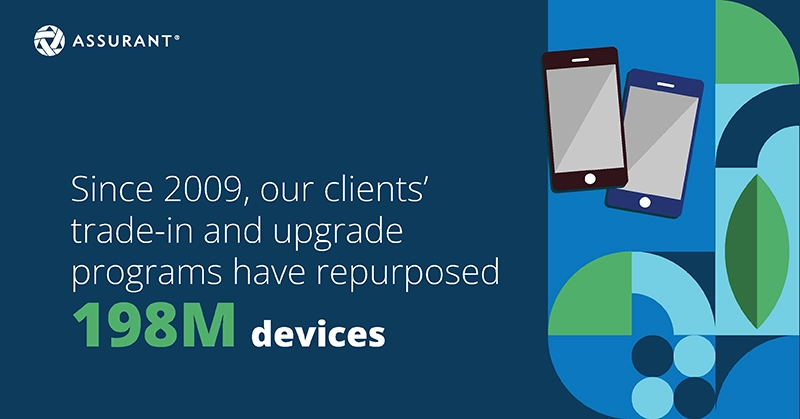
These strategies aren’t new, but their impact continues to grow. Since 2009, our clients’ trade-in programs have resulted in nearly 200 million devices being repurposed.
Download our infographic to see the environmental impact this has made.